Katup Minyak dan Gas Darat: Aplikasi, Bahan, dan Panduan Pemilihan
Onshore oil and gas valves isolate, throttle and prevent reverse
flow in gathering, processing, transmission and storage systems.
WDL Valve supplies ball, gate, globe, check and control valves for
crude oil, natural gas, condensate, produced water and utility
services.
What are onshore oil and gas valves?
Onshore oil and gas valves are pressure-containing components used to
start, stop, regulate or prevent reverse flow in land-based production,
processing, pipeline and storage facilities. Valve type, pressure
class, material, seat design and actuation method must match the medium,
operating pressure, temperature, corrosion risk and required shutoff
performance.
Where Are Valves Used in Onshore Oil and Gas Systems?
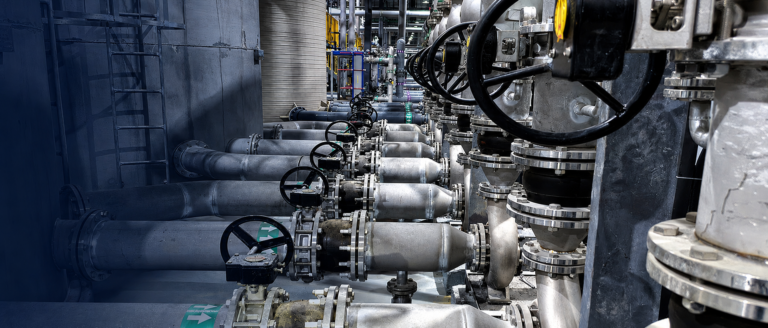
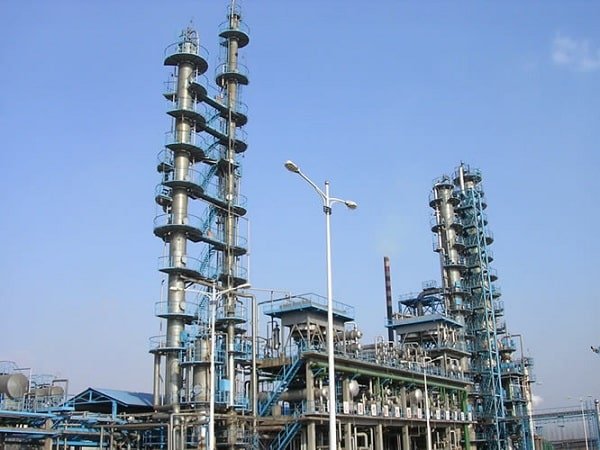
Onshore oil and gas valves are installed between the well site and
the final pipeline, terminal or storage facility. Each location
creates different requirements for pressure containment, shutoff,
erosion resistance, corrosion control and automation.
Which Valve Types Are Used in Onshore Oil and Gas Facilities?
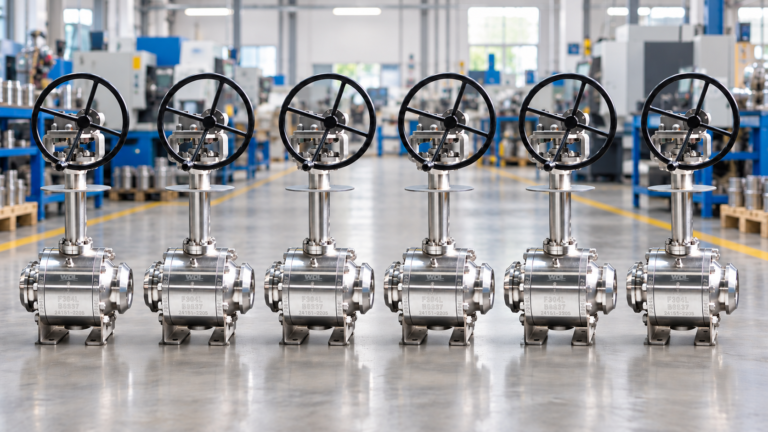
Katup Bola
Ball valves provide quarter-turn operation, low flow resistance and
reliable isolation. Floating ball valves are commonly used in
smaller sizes, while trunnion-mounted ball valves are preferred for
larger sizes, higher pressure classes and pipeline service. Full-bore
designs may be specified where pigging or minimum pressure loss is
wajib.
Katup Gerbang
Gate valves provide a straight flow path and low pressure loss when
fully open. Slab gate and expanding gate designs are used in pipeline
and terminal service, while wedge gate valves are common in process
and utility piping. Gate valves are normally selected for isolation,
not continuous throttling.
Katup Globe
Globe valves are used for manual throttling, bypass lines, drains and
services where flow adjustment is more important than minimum
pressure loss. Disc and seat materials should be selected for the
expected pressure drop, velocity and operating frequency.
Katup Cek
Check valves prevent reverse flow through pumps, compressors and
process equipment. Swing, piston, dual-plate and axial-flow designs
provide different combinations of pressure loss, closing speed and
resistance to flow-induced movement.
Katup Pengatur
Control valves regulate pressure, flow, temperature or liquid level.
The valve must be sized using the minimum, normal and maximum process
conditions. Trim design should also account for cavitation, flashing,
erosion, noise and gas velocity.
Katup Kupu-kupu
Butterfly valves offer compact dimensions and lower weight in
large-diameter utility, cooling-water and low-pressure hydrocarbon
lines. High-performance or triple-offset designs may be specified
when the application requires higher pressure, temperature or
improved shutoff performance.
How Are Materials Selected for Onshore Oil and Gas Valves?
Onshore oil and gas valve materials are selected from the complete
process conditions rather than pressure class alone. The material
review should include temperature, fluid composition, hydrogen
sulfide, carbon dioxide, chlorides, water content, solids, velocity
and expected corrosion allowance.
Soft-Seated or Metal-Seated Valve: Which Should You Choose?
Soft-seated valves are generally selected when tight shutoff is
required and the temperature, pressure, chemical composition and
solids content are compatible with the seat material. Common seat
materials include PTFE, reinforced PTFE, PEEK and elastomeric
compounds.
Metal-seated valves are considered for elevated temperature,
abrasive particles, high differential pressure, frequent cycling or
services that could damage a soft seat. Metal seats may use hard
facing or surface treatment to improve wear and erosion resistance.
Which Standards Apply to Onshore Oil and Gas Valves?
The applicable valve standard depends on the equipment type,
pipeline or process location and purchaser specification. A project
may reference separate standards for design, dimensions, inspection,
leakage testing, fire testing, fugitive emissions and sour-service
material selection.
What Operating Risks Should Be Considered?
Sour Gas and Hydrogen Sulfide
Hydrogen sulfide can increase the risk of cracking in susceptible
metallic materials. Material grade, hardness, heat treatment, weld
procedure and environmental limits must be checked against the
project sour-service specification.
Carbon Dioxide and Produced Water
Wet carbon dioxide can contribute to internal corrosion. Chlorides,
water chemistry, temperature and flow conditions may also affect
localized corrosion and material selection.
Sand and Solid Particles
Sand and scale can erode seats, closure members and control-valve
trim. High-velocity flow through a partially open valve can
accelerate damage at restricted flow passages.
High Differential Pressure
High differential pressure affects operating torque, actuator sizing,
control stability and seat life. Gas decompression, cavitation,
flashing and aerodynamic noise should be evaluated where applicable.
Fire Exposure
Fire-safe construction may be required for valves handling flammable
hydrocarbons. The purchaser should specify the required fire-test
standard and verify that the tested valve design, materials and size
range cover the ordered product.
Fugitive Emissions
Stem packing and body joints may release volatile hydrocarbons.
Low-emission packing, controlled surface finish, suitable bolting and
verified assembly procedures help reduce external leakage.
How Do You Select an Onshore Oil and Gas Valve?
- Define the valve function.
State whether the valve is required for isolation, throttling,
reverse-flow prevention, pressure control or emergency shutdown. - Identify the complete medium composition.
Include oil, gas, water, condensate, solids, hydrogen sulfide,
carbon dioxide, chlorides and process chemicals. - Provide the design conditions.
State design pressure, operating pressure, design temperature and
minimum operating temperature. - Select the valve type.
Match the valve operating principle to the required shutoff,
pressure loss, flow-control duty and cycling frequency. - Select body and trim materials.
Review corrosion, erosion, sour service, low temperature and
mechanical strength. - Define the seat and leakage requirement.
Specify soft or metal seats and the applicable leakage acceptance
criteria. - Confirm end connections and dimensions.
State flanged, butt-weld, socket-weld or threaded ends together
with the required dimensional standards. - Select the operating method.
Choose lever, gearbox, electric, pneumatic, hydraulic or
gas-over-oil operation. - State special qualification requirements.
Include fire-safe, antistatic, fugitive-emission, sour-service,
nondestructive-examination and impact-testing requirements. - Confirm inspection and documentation.
Define pressure testing, material certificates, inspection plan,
drawings, calculations and third-party inspection requirements.
Manual or Actuated Valve: Which Is Suitable?
Manual valves are suitable where operation is infrequent and the
valve is accessible. A gearbox may be required when valve size,
differential pressure or seat torque makes direct lever or handwheel
operation impractical.
Pneumatic, electric, hydraulic and gas-over-oil actuators support
remote operation, process control and emergency shutdown. Actuator
sizing should use the maximum required valve torque or thrust with
the project safety factor and the minimum available power, air or
hydraulic pressure.
The actuator specification should state opening time, closing time,
fail-open, fail-close or fail-in-place action, position feedback,
hazardous-area classification, enclosure protection and local manual
override requirements.
What Information Is Required for an Oil and Gas Valve Quotation?
A complete datasheet allows the valve manufacturer to select the
correct design, pressure class, materials, seats, actuator and
testing requirements without relying on assumptions.
Frequently Asked Questions About Onshore Oil and Gas Valves
Katup apa saja yang paling umum digunakan pada jaringan pipa minyak dan gas di darat?
Trunnion-mounted ball valves, through-conduit gate valves and
check valves are commonly used in onshore transmission pipelines.
The final selection depends on pressure class, pipeline size,
pigging requirements, shutoff performance and operating method.
Apa perbedaan antara API 6D dan ASME B16.34?
API 6D addresses pipeline and piping valves, while ASME B16.34
covers pressure-temperature ratings, materials, dimensions,
examination, testing and marking for the valve types within its
scope. Oil and gas projects may specify both standards together.
Katup mana yang cocok untuk gas alam bertekanan tinggi?
Trunnion-mounted ball valves and selected gate valves are commonly
used for high-pressure natural gas isolation. Valve design,
pressure class, seat construction, body material, stem sealing
and actuator torque must be verified against the actual gas
syarat-syarat.
Apa itu katup pelepas tekanan?
A sour-service valve uses materials and manufacturing controls
selected for an H₂S-containing environment. Material grade,
hardness, heat treatment, welding and environmental limits must
comply with the project specification.
Kapan katup pengaman kebakaran diperlukan?
A fire-safe valve may be required where the valve handles
flammable hydrocarbons and the project risk assessment or
specification requires fire-tested construction. The applicable
fire-test standard and qualification scope should be stated in
the purchase documents.
Apakah katup gerbang dapat digunakan untuk mengatur aliran?
A standard gate valve is generally intended for fully open or
fully closed isolation. Prolonged throttling may cause vibration,
erosion and damage to the gate and seats. Globe or control valves
are normally better choices for continuous flow regulation.
Informasi apa saja yang harus dilampirkan dalam permintaan penawaran (RFQ) untuk katup minyak dan gas?
An oil and gas valve RFQ should include valve type, size,
pressure class, medium composition, pressure, temperature,
materials, end connection, operation method, standards, testing
requirements and required project documents.
Request an Onshore Oil and Gas Valve Quotation
WDL Valve supplies ball, gate, globe, check, butterfly and control
valves for crude oil, natural gas, condensate, produced water and
utility systems. Send us your datasheet, valve list or project
specification for technical review and quotation.