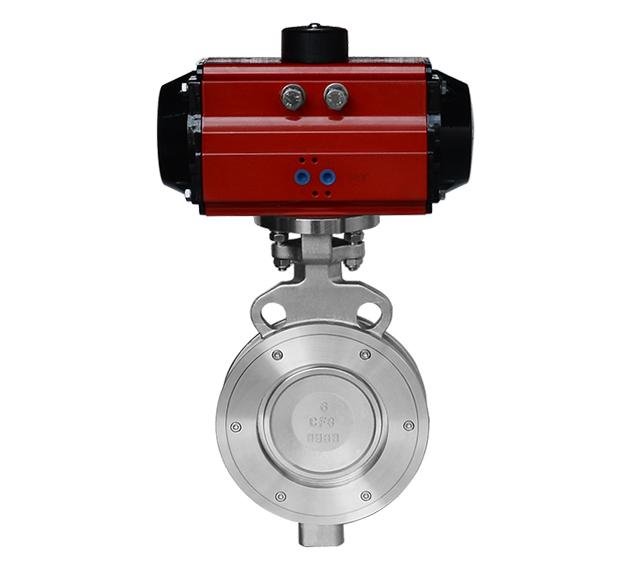
Large Diameter Butterfly Valves for Wastewater
Jawaban langsung: Large diameter butterfly valves for wastewater must be selected from the real differential pressure, flow velocity, solids content, seat material, coating system, actuator torque and installation arrangement. Nominal diameter and pipeline pressure alone do not define a reliable valve.
Published: October 22, 2026 | Penulis: Wong WP, Manajer Penjualan, Xiamen WDL Valve Co., Ltd.
What changed for large waterworks butterfly valves?
- Yang AWWA standards list now includes C516-26 for rubber-seated butterfly valves in sizes 78 in. (2,000 mm) and larger.
- AWWA C519-25 addresses high-performance waterworks butterfly valves from 3 to 60 in. (75 to 1,500 mm).
- This guide separates clean-water selection from sludge, screened wastewater, aeration and chemical-service requirements.

Which butterfly valve design fits wastewater service?
Rubber-seated butterfly valves are widely used for low- and medium-temperature water duties because they provide compact shutoff with relatively low weight. High-performance offset designs may be appropriate when pressure, velocity, temperature or operating frequency exceeds the range of a conventional concentric valve. The selected design must match the project standard and the actual wastewater duty.
AWWA’s published C504 scope information covers rubber-seated butterfly valves for raw water, potable water, wastewater and reclaimed water in a defined pH and temperature range. That scope should not be treated as a universal material-compatibility approval. Industrial effluent, solvents, hydrocarbons, high chloride levels or concentrated treatment chemicals may require another seat, coating or valve construction.
| Wastewater duty | Typical valve approach | Checks before selection |
|---|---|---|
| Plant inlet or screened wastewater isolation | Resilient-seated butterfly valve where solids size permits | Ragging risk, grit, velocity, seat cleaning and access |
| Return or waste activated sludge | Full-opening suitability must be checked; plug or knife gate designs may also be evaluated | Solids concentration, fibers, minimum velocity and deposit formation |
| Aeration air | Butterfly valve with manual or modulating actuator | Control range, noise, temperature, cycling and fail position |
| Pump discharge isolation | Gear-operated or actuated butterfly valve plus a separately selected check valve | Surge pressure, closure time, pump trip and interlock logic |
| Buried transmission line | Double-flanged or project-approved body with buried-service gearing | Soil loading, groundwater, extension stem, valve box and external coating |
| Pemberian bahan kimia | Chemically compatible lined or alloy valve where required | Chemical name, concentration, temperature and cleaning method |
How should seat material and coating be specified?
Seat selection begins with the complete water chemistry. EPDM is commonly considered for water and many wastewater duties, while NBR may be selected for certain oil-bearing fluids. Neither material should be approved from a short media label. Confirm chemical concentration, temperature, disinfectants, oils, cleaning agents and expected aging. Chlorine and chloramine exposure can change elastomer life, and hydrogen sulfide can affect both worker safety and materials.
For ductile-iron or carbon-steel bodies, specify the internal and external coating system, surface preparation, holiday testing where required, dry-film thickness and repair procedure. A coating name without preparation and acceptance criteria is difficult to inspect. For immersed or buried installations, include external corrosion protection and fastener materials.
Why actuator torque must be calculated for the application
Large valve torque is not a scaled-up version of small valve torque. The actuator calculation should include seating and unseating torque, bearing friction, hydrostatic torque, dynamic torque at maximum velocity, seat aging, differential pressure, fouling and the required safety factor. The supplier also needs the power supply, opening time, cycling frequency, control signal and fail position.
A slow closing time may reduce surge in some systems, but it is not a substitute for a transient analysis. Pump trip, check-valve behavior, air pockets and pipeline profile can dominate the pressure event. Coordinate the butterfly valve, check valve, actuator and control logic as one system.

What should be checked before installation?
- Confirm that the disc clears the mating flanges, lining and adjacent fittings.
- Support the valve and actuator independently where their mass can load the pipe.
- Follow the approved shaft orientation for solids-bearing service.
- Provide dismantling space, lifting points and access to the gearbox or actuator.
- Keep welding debris, sand and coating overspray away from the seat.
- Verify open/closed indication, travel stops, limit switches and fail action.
- Commission the valve with the pump and control sequence, not as an isolated component.
Large diameter wastewater butterfly valve RFQ checklist
| RFQ field | Information to provide |
|---|---|
| Layanan | Raw sewage, screened wastewater, sludge, reclaimed water, aeration or chemical solution |
| Operating data | Size, design/operating pressure, differential pressure, temperature and flow range |
| Fluid data | pH, chlorides, solids concentration, maximum particle size, fibers, oils and chemicals |
| Konstruksi | Body style, end standard, seat, disc, shaft, fasteners and coating system |
| Actuation | Manual, electric, pneumatic or hydraulic; power, signal, cycle time and fail position |
| Installation | Indoor, outdoor, buried or submerged; pipe orientation, access and IP/NEMA requirement |
| Pengujian | Applicable standard, shell/seat test, leakage acceptance, coating inspection and witness points |
Frequently asked questions about large diameter butterfly valves for wastewater
Are butterfly valves suitable for sludge?
They can be suitable when solids size, fiber content, velocity and seat-cleaning behavior are acceptable. Heavy sludge or ragging service may justify comparison with eccentric plug or knife gate valves.
Should a wastewater butterfly valve use a wafer or flanged body?
Use the body style approved by the piping design and maintenance plan. Large buried or critical isolation duties often favor a more rigid, project-specified flanged arrangement.
Which AWWA standard applies?
The answer depends on size and valve construction. Current AWWA listings include C504-23, C516-26 and C519-25; the purchaser should verify the exact scope and licensed edition.
Can actuator size be selected from nominal diameter?
No. Differential pressure, velocity, seat design, fouling, operating time and safety factor all affect required torque.
What information prevents premature seat failure?
Provide the full chemistry, temperature, solids, cleaning method, cycling frequency and expected storage or shutdown conditions. “Wastewater” alone is not sufficient.
For a wider plant-level overview, see Katup untuk Pengolahan Air dan Air Limbah. Related WDL products include the D371X gear-operated soft-seated butterfly valve dan katup kupu-kupu pneumatik dengan dudukan lunak.
Request a wastewater valve review
Send the process data, piping class, actuator requirement and project standard to WDL Valve for a technical and commercial review.