Можно ли использовать обратный клапан в качестве запорного клапана в нефте- и газопроводах?
The question “Can a Check Valve Be Used as an Isolation Valve?” often arises because a closed check valve may appear to hold pressure from one direction. That does not make it equivalent to a gate valve, ball valve, double block and bleed arrangement or line blind. The required isolation method must follow the approved piping design, operating procedure and applicable regulations.
What Is the Difference Between a Check Valve and an Isolation Valve?
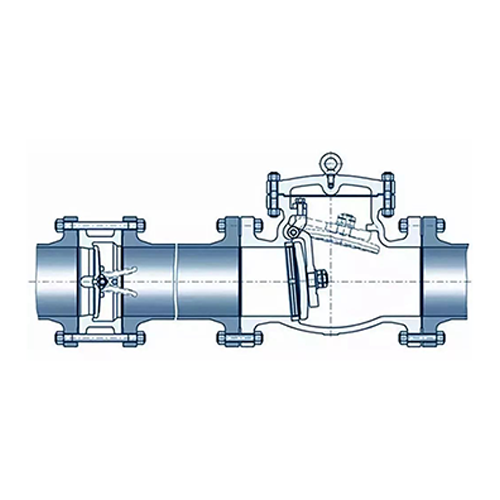
A check valve is an automatic non-return valve. Forward flow opens the disc, ball, piston or other closure member. When flow stops or reverses, reverse pressure and gravity or spring force move the closure member toward the seat.
An isolation valve is deliberately opened or closed by an operator or actuator. Its position can usually be identified, secured and included in a lockout or tagout procedure. Common oil and gas isolation valves include gate valves, ball valves and plug valves selected for the required pressure class, temperature, media and shutoff performance.
| Device or method | Primary purpose | Operator control | Suitable as verified maintenance isolation? |
|---|---|---|---|
| Check valve | Prevent reverse flow | Normally automatic | Generally no, when used alone |
| Gate, ball or plug valve | Intentional pipeline isolation | Manual or actuated | Depends on valve design, leakage requirement and isolation procedure |
| Double block and bleed | Two barriers with an intermediate bleed point | Controlled and verifiable | Used where specified by the procedure and system design |
| Blind or removed spool | Physical separation of the line | Installed through a controlled procedure | Commonly used when positive physical isolation is required |
Why Is a Check Valve Not Reliable as the Only Isolation Barrier?
1. Closure Depends on Operating Conditions
A check valve needs the correct flow direction and sufficient reverse differential pressure to move and hold its closure member against the seat. Under low-pressure, static or equalized conditions, the disc may not develop the seating force needed for dependable shutoff.
2. The Valve Can Leak
Seat wear, corrosion, solid particles, wax, scale or a damaged hinge can prevent full closure. Oil and gas service may introduce debris or deposits that remain between the disc and seat. Even a valve that passes its factory test can develop leakage after operating in the pipeline.
3. Its Position May Not Be Directly Verifiable
Many swing and lift check valves have no external position indicator. An operator may be unable to confirm whether the closure member is fully seated without additional instrumentation, testing or internal inspection.
4. It Is Not Normally Lockable
Maintenance isolation procedures commonly require an energy-isolating device that can be locked or tagged in a defined position. A standard check valve operates automatically and normally provides no manual means to secure the disc closed.
5. Pressure Can Remain Trapped
A check valve may trap liquid or gas between closed valves. Thermal expansion, leakage or pressure migration can then raise the pressure in the isolated section. The isolation plan must include safe depressurization, draining, venting and pressure verification.
When Can a Check Valve Support Pipeline Isolation?
A check valve can support the safety of an oil and gas system by limiting reverse flow during pump shutdown, compressor trip or abnormal pressure reversal. It may form one protective layer in a broader system, but the maintenance team should not treat it as the sole barrier unless a documented engineering assessment, approved procedure and applicable rules specifically allow that arrangement.
Special designs such as stop-check valves combine non-return operation with a manual closing function. Their isolation capability must be evaluated from the exact design, seat-leakage rating, pressure direction, operating mechanism and project acceptance criteria. The words “stop-check” do not automatically establish positive isolation for every maintenance activity.
What Isolation Method Should Be Used Instead?
The correct method depends on the fluid hazard, pressure, temperature, task and company procedure. Options can include a lockable isolation valve, two block valves with an open bleed between them, a spectacle blind, a slip blind or removal of a piping spool. The selected method must provide the level of separation required for the planned work.
OSHA defines isolation for permit-required confined spaces using methods such as blanking or blinding, removing or misaligning piping, and double block and bleed. The exact regulatory requirement varies with the work and jurisdiction, so the site’s authorized engineer and safety team must approve the isolation plan.
How Should a Check Valve Be Selected for Oil and Gas Service?
Although a check valve is not normally the primary isolation valve, correct selection remains important for reverse-flow protection. Our производитель промышленных обратных клапанов page summarizes available designs, materials and RFQ inputs. Review the following information before ordering:
- Process medium: Identify crude oil, refined product, natural gas, condensate, produced water or multiphase service.
- Pressure and temperature: Provide normal, design, startup and upset conditions.
- Flow data: State normal, minimum and maximum flow, velocity and expected reverse-flow conditions.
- Valve pattern: Compare swing, lift, piston, dual-plate and axial-flow designs for the installation.
- Orientation: Confirm horizontal or vertical installation and the permitted flow direction.
- Материалы: Select body, trim, seat and spring materials for corrosion, erosion and sour-service requirements.
- Dynamic response: Review slam risk, closing speed, pump behavior and pressure surge.
- Testing: Specify the applicable design and testing standards, leakage criteria and required documents.
Common Check Valve Types in Oil and Gas Pipelines
| Check valve type | Typical advantage | Important review point |
|---|---|---|
| Обратный клапан качающегося типа | Straight flow path and suitability for many pipeline sizes | Closing time, orientation and slam potential |
| Lift or piston check valve | Guided closure member and compact flow control | Pressure drop, cleanliness and installation direction |
| Dual-plate wafer check valve | Short face-to-face dimension and relatively low mass | Spring selection, velocity and flange compatibility |
| Axial-flow check valve | Fast response and controlled closure in suitable service | Required flow rate, pressure loss and internal design |
Applicable Standards and Project Documentation
Спецификация API 6D covers pipeline and piping valves used in the petroleum and natural gas industries, including check, gate, ball and plug valves. ASME B31.3 covers process piping used in refineries, chemical plants and related facilities.
The purchase specification should state the required valve standard, pressure class, size, ends, face-to-face dimension, materials, trim, testing, fire-safe requirements, sour-service requirements and documentation. Isolation philosophy and maintenance procedures belong in the project safety and operating documents rather than being inferred from the valve name.
Часто задаваемые вопросы
Can a Closed Check Valve Hold Pressure?
It may hold pressure in the reverse direction, but its sealing depends on differential pressure, seat condition and cleanliness. Holding pressure during operation does not automatically qualify it as a verified maintenance-isolation barrier.
Can a Check Valve Replace a Gate Valve?
No. A check valve provides automatic non-return protection, while a gate valve is deliberately operated for isolation. The two valves have different functions and selection criteria.
Is a Stop-Check Valve an Isolation Valve?
A stop-check valve includes a mechanism that can restrict or stop the closure member, but its acceptance for isolation depends on its design, leakage performance and the approved procedure. Review the manufacturer’s documentation and project requirements.
What Is Positive Isolation?
Positive isolation usually means a method that physically prevents hazardous material from reaching the work area, such as an approved blind, disconnected spool or another method defined by the applicable procedure and regulation.
Discuss Your Oil and Gas Valve Requirements
WDL Valve supplies check valves, gate valves и ball valves for oil, gas and industrial piping. Send the medium, size, pressure class, temperature, flow data, materials, end connections and applicable standards through the WDL Valve contact page for technical review.
Автор: Wong WP, Sales Manager, Xiamen WDL Valve Co., Ltd.