
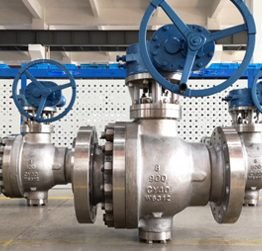
Pemilihan Katup Bola Industri untuk Pengoperasian yang Andal
Panduan teknis ini telah ditinjau pada: Oktober 2026

Jawaban singkatnya
Pilihlah katup bola mengapung untuk berbagai tugas isolasi dengan diameter kecil dan tekanan sedang. Pertimbangkan desain yang dipasang pada trunnion jika ukuran, tekanan, atau torsi pengoperasiannya tinggi. Gunakan dudukan lunak jika penutupan yang rapat dan kondisi suhu yang sesuai menjadi prioritas; pertimbangkan dudukan logam untuk media abrasif, siklus pengoperasian yang sering, atau suhu tinggi. Pemilihan akhir harus mengikuti spesifikasi perpipaan yang disetujui dan peringkat tekanan-suhu dari pabrikan katup.
Bagaimana seharusnya proses pemilihan katup bola industri dimulai?
Pemilihan katup bola industri dimulai dengan lembar data proses yang lengkap. Pabrikan memerlukan data tekanan normal dan maksimum, suhu normal dan suhu desain, nama fluida, keadaan fluida, konsentrasi, kandungan padatan, arah aliran, serta persyaratan kinerja kebocoran. Informasi ini menentukan apakah bahan bodi, trim, dan dudukan yang diusulkan dapat tetap aman dan berfungsi dengan baik di seluruh rentang operasi.
Tentukan kondisi operasi yang sebenarnya, bukan hanya kelas pipa. Katup yang dipasang pada pipa Kelas 300 dapat mengalami dekompresi cepat, tekanan diferensial tinggi, pengoperasian awal pada suhu rendah, atau partikel abrasif. Setiap kondisi tersebut dapat memengaruhi desain dudukan katup, penyegelan batang katup, pengaturan pelepasan tekanan pada rongga, dan torsi aktuator.
- Nama, komposisi, dan konsentrasi cairan
- Tekanan desain dan tekanan diferensial maksimum
- Suhu minimum, normal, dan desain
- Ukuran, diameter dalam, dan sambungan ujung yang diperlukan
- Frekuensi operasi dan laju siklus yang diharapkan
- Arah penutupan dan persyaratan kebocoran
- Pengoperasian secara manual, pneumatik, elektrik, atau hidraulik
- Standar katup, pengujian, dan proyek yang berlaku
Konstruksi mana yang mendukung pemilihan katup bola industri yang andal?
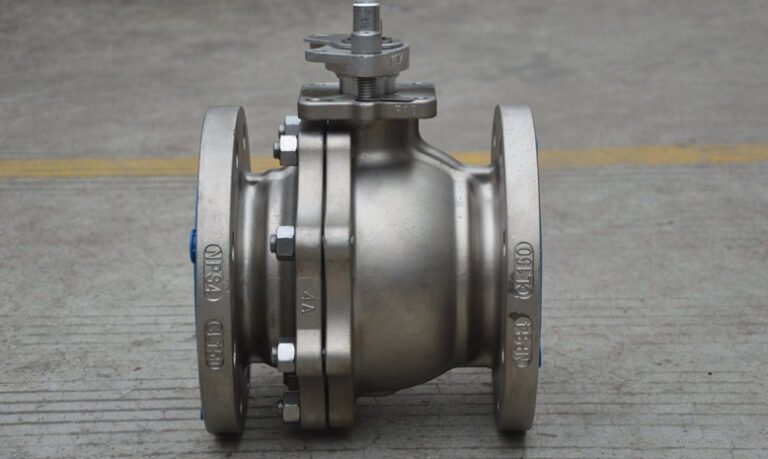
Katup bola mengapung memanfaatkan tekanan fluida untuk menggerakkan bola ke arah dudukan di hilir. Desainnya ringkas dan banyak digunakan untuk ukuran kecil dan menengah. Torsi operasi dan beban dudukan yang diperlukan akan meningkat seiring bertambahnya ukuran dan tekanan, sehingga desain mengapung tidak boleh dipilih hanya berdasarkan ukuran nominal saja.
Katup bola tipe trunnion menopang bola dengan bantalan atas dan bawah yang tetap. Dudukan katup bergerak mendekati bola, yang membantu mengendalikan torsi pada ukuran yang lebih besar dan penggunaan pipa bertekanan tinggi. Katup tipe trunnion juga dapat dikonfigurasi dengan sistem double block and bleed, pelepasan tekanan rongga, serta injeksi sealant darurat jika disyaratkan oleh spesifikasi proyek.
Desain dengan akses dari atas memungkinkan akses ke bagian-bagian internal dari atas dan mungkin cocok untuk lokasi-lokasi di mana melepas katup dari pipa sulit dilakukan. Desain dengan akses dari samping umum digunakan dalam sistem pipa dan dapat disediakan dalam konfigurasi badan katup dua bagian atau tiga bagian. Desain yang dipilih bergantung pada akses pemeliharaan, sambungan ujung, diameter dalam, kelas tekanan, dan prosedur di lokasi.
Pemilihan katup bola industri berdasarkan kondisi pengoperasian
Tabel pemilihan katup bola industri ini merupakan titik awal untuk tinjauan teknis. Tabel ini tidak menggantikan lembar data proyek atau penilaian kompatibilitas bahan.
On a phone, swipe left or right inside the table to view all columns.
How does the process medium affect industrial ball valve selection?
Industrial ball valve selection requires materials that resist both general corrosion and local damage at seats, stem areas, body cavities and flange crevices. Carbon steel is commonly specified for compatible oil, gas and utility service. Austenitic stainless steels may suit many water and chemical duties, but material grade alone does not confirm compatibility.
Duplex and super duplex stainless steels are often considered for chloride-bearing water, seawater and offshore service because their strength and resistance to chloride-induced attack can exceed conventional austenitic grades under suitable conditions. For an application example, see the Katup Bola Duplex WDL. Nickel alloys, Monel, titanium and nickel-aluminum bronze may be selected for specific corrosive media after reviewing concentration, temperature, aeration and fluid velocity.
Industrial ball valve selection must cover every wetted component, not only the body. The ball, stem, seat supports, springs, seals and bolting may experience different corrosion or galling risks. Ask the supplier to state the material of each pressure-containing and wetted part in the datasheet.
How should industrial ball valve selection compare soft and metal seats?
During industrial ball valve selection, soft seats are normally preferred when very tight shutoff, moderate temperature and clean compatible media are required. PTFE, reinforced PTFE, PEEK and other engineered polymers have different limits for temperature, pressure, chemical resistance and deformation. The seat designation must therefore be checked against the complete operating envelope.
Metal seats are considered for abrasive particles, high temperature, rapid pressure changes, severe erosion or frequent cycling. A metal-seated ball valve may use hardened or coated sealing surfaces, but the required leakage class must be agreed before manufacture. “Metal seated” does not automatically mean zero leakage under every condition.
For decompression service, the seat and seal system may also need resistance to rapid gas decompression. For fire-risk duties, specify the required fire-safe design and test standard. These requirements should appear on the purchase specification rather than being assumed from the product name.
Does bore size matter in industrial ball valve selection?
Industrial ball valve selection must compare bore geometry. Full-bore ball valves provide an internal passage close to the connected pipe bore. They are often specified where pressure loss must be low, cleaning pigs must pass or solids could collect at a restriction. Reduced-bore valves can lower weight and cost where the calculated pressure drop and flow velocity remain acceptable.
The word “full bore” should be supported by an agreed minimum bore dimension. This is especially important for piggable pipelines and large valves. Confirm the bore, face-to-face dimension and end preparation on the approved drawing before production.
How does industrial ball valve selection affect actuator sizing?
Industrial ball valve selection also includes actuator sizing. An actuator must be sized from the valve’s maximum required operating torque, not from nominal pipe size. The calculation should consider maximum differential pressure, seat friction, service factor, supply pressure, operating time and the required fail position. Dry gas, long idle periods, low temperature and deposits can increase the torque needed in service.
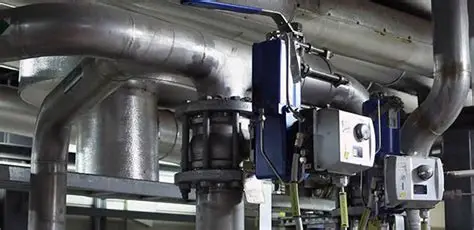
Pneumatic actuators suit fast, repeatable operation where compressed air is available. Electric actuators are useful where electrical control and slower travel are acceptable. Hydraulic actuators can provide high torque for pipeline and emergency shutdown applications. Limit switches, solenoid valves, positioners and manual overrides must match the control philosophy and hazardous-area classification.
Which standards and tests should be confirmed?
Industrial ball valve selection must identify the applicable standard, which depends on the industry and valve duty. ASME B16.34 covers pressure-temperature ratings and other requirements for many flanged, threaded and welding-end valves. Spesifikasi API 6D applies to valves used in pipeline and piping systems within its stated scope. The purchase order should identify the required edition and any project-specific additions.
Testing may include shell pressure, high-pressure closure, low-pressure gas closure, antistatic continuity, fire-safe qualification, fugitive-emission testing, cryogenic testing and nondestructive examination. Not every test is required for every valve. Industrial ball valve selection is more reliable when the inspection and documentation scope is agreed before the order is placed.
What selection mistakes cause early valve problems?
A common industrial ball valve selection mistake is choosing the valve from pressure class and body material while leaving the seat and seals unspecified. Another is using maximum pressure and maximum temperature as separate values without checking whether they can occur at the same time. The complete pressure-temperature curve must be reviewed.
Oversized actuators can damage stems or seats, while undersized actuators may stall under maximum differential pressure. Incorrect flow direction can prevent a single-piston-effect seat from relieving cavity pressure as intended. A valve installed for throttling may also suffer seat and ball erosion if the design was intended only for open-or-closed isolation.
What should be included in an industrial ball valve selection RFQ?
A complete RFQ improves industrial ball valve selection because it allows the manufacturer to review the application instead of making assumptions. Send the following information with the inquiry:
- Valve quantity, nominal size and pressure class
- Process medium, concentration and solids content
- Design pressure, differential pressure and temperature range
- Body, ball, stem, seat and seal material requirements
- Full bore or reduced bore and required minimum bore
- Flanged, butt-weld, socket-weld or threaded ends
- Floating or trunnion design and required seat action
- Manual operator or actuator control details
- Design, testing, fire-safe and emission standards
- Inspection documents, certificates and third-party witness points
Ball valve engineering support from WDL Valve
WDL Valve supports industrial ball valve selection and supplies floating, trunnion-mounted, top-entry, side-entry, cryogenic and special-alloy ball valves for industrial projects. Review our produsen katup bola industri capabilities. Available materials include carbon steel, stainless steel, duplex and super duplex stainless steel, titanium, nickel alloys, Monel and nickel-aluminum bronze, subject to the approved project specification.
Send the medium, size, pressure, temperature, material and operating requirements to discuss your ball valve application with WDL Valve.
Frequently asked questions about industrial ball valve selection
Apakah katup bola dapat digunakan untuk mengontrol aliran?
A standard ball valve is mainly an isolation valve. Limited throttling may be possible with an engineered control-ball design, characterized trim and correctly sized actuator. Holding a general-service ball valve partly open can damage the seat and ball through high velocity or cavitation.
When does industrial ball valve selection favor a trunnion-mounted design?
A trunnion-mounted ball valve is often preferred for large size, high pressure or high differential pressure because the supported ball helps control operating torque. The final choice depends on valve size, pressure class, seat design and pipeline requirements.
How should industrial ball valve selection address seawater materials?
Duplex stainless steel, super duplex stainless steel, titanium, Monel and nickel-aluminum bronze may be considered for seawater, depending on temperature, velocity, oxygen content, chlorination and galvanic conditions. A seawater material assessment should cover all wetted components.
Does industrial ball valve selection guarantee zero leakage with metal seats?
No. Metal-seated ball valves are commonly used for high temperature, abrasive media and frequent cycling, but acceptable leakage depends on the specified test standard and leakage class. State the required acceptance criterion in the RFQ.
Apa informasi terpenting yang perlu diperhatikan dalam pemilihan katup bola industri?
The most important information is the process medium, design pressure, full temperature range, maximum differential pressure, shutoff requirement and operating frequency. These values guide the selection of the body design, material, seat and actuator.
2 Comments