Welcome to Xiamen WDL VALVE Co., Ltd.

WDL Valve supplies engineered control valve solutions for flow regulation, pressure reduction and stable system operation. Our core range includes plunger-type flow control and pressure regulating valves for water transmission, treatment plants, reservoirs and industrial utility systems.
Valve geometry, actuator sizing and control strategy are reviewed against actual hydraulic and operating data.
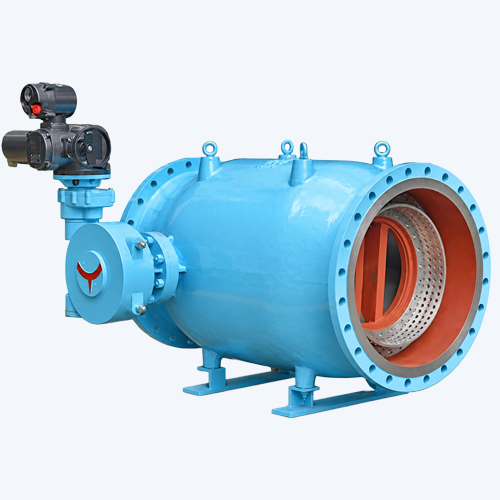
A control valve should be selected from the required duty rather than nominal pipe size alone. WDL Valve reviews upstream and downstream pressure, minimum and maximum flow, cavitation risk, allowable noise, operating range and fail position before recommending a configuration.
Linear travel and engineered outlet elements support stable control across the required operating range.
Multi-hole, double-layer or slotted outlet structures can distribute pressure drop and reduce cavitation intensity.
Controlled opening and closing profiles help coordinate pumps, pipelines and reservoirs to reduce hydraulic shock.
Browse the plunger valve product category for available configurations.
Outlet structures may include perforated cage, double-layer perforated, fan blade, multi-slot or project-specific anti-cavitation designs.
Electric, pneumatic or hydraulic operation can be selected from thrust, travel, cycle time and control-system requirements. Position feedback, limit switches, local controls and signal interfaces are specified as part of the valve package.
Fail-open, fail-closed or fail-in-place behavior must be defined by the system designer. Emergency operating sequences and power-loss behavior should be confirmed during technical review.
The engineering review evaluates cavitation index, velocity, required controllable range, pressure recovery and installation conditions. When a wide operating envelope exists, several duty points should be supplied rather than only the design maximum.
Inspection may include material certification, dimensional checks, shell and seat pressure tests, actuator functional testing, stroke verification and control-accessory checks. Coating systems for water service can be documented according to project requirements.
Provide pipe size, minimum/normal/maximum flow, upstream and downstream pressure at each duty point, fluid and temperature, allowable leakage, valve location, actuator power source, control signal, fail position, quantity and applicable project standards.
A line-size valve may operate too close to its closed position, causing unstable control, vibration, noise or cavitation. The required flow coefficient and duty range must be calculated.
Pressure drop can be distributed through engineered perforations, cages or staged outlet elements. The correct solution depends on system pressures, flow and available downstream backpressure.
Yes. Electric, pneumatic or hydraulic operators and feedback accessories can be selected for the required thrust, speed, environment and control signal.
Send your valve specifications, drawings or RFQ. Our engineering team will review the operating conditions and contact you with a suitable solution.
WhatsApp us