Welcome to Xiamen WDL VALVE Co., Ltd.

WDL Valve manufactures knife gate valves for slurry, wastewater, pulp and paper, mining, power and bulk-handling applications. The thin gate passes through suspended solids and supports compact isolation where conventional valves may clog.
Body material, gate hardness, seat design, pressure rating and manual or pneumatic operation are configured around the actual medium and installation.
Knife gate valves are primarily on-off isolation devices for media containing fibers, suspended solids, sludge or dry bulk material. Correct selection depends on solids concentration, particle size, abrasion, pressure direction, cycling frequency and whether the valve must seal in one or both directions.
An economical one-way sealing design for services with a defined pressure direction.
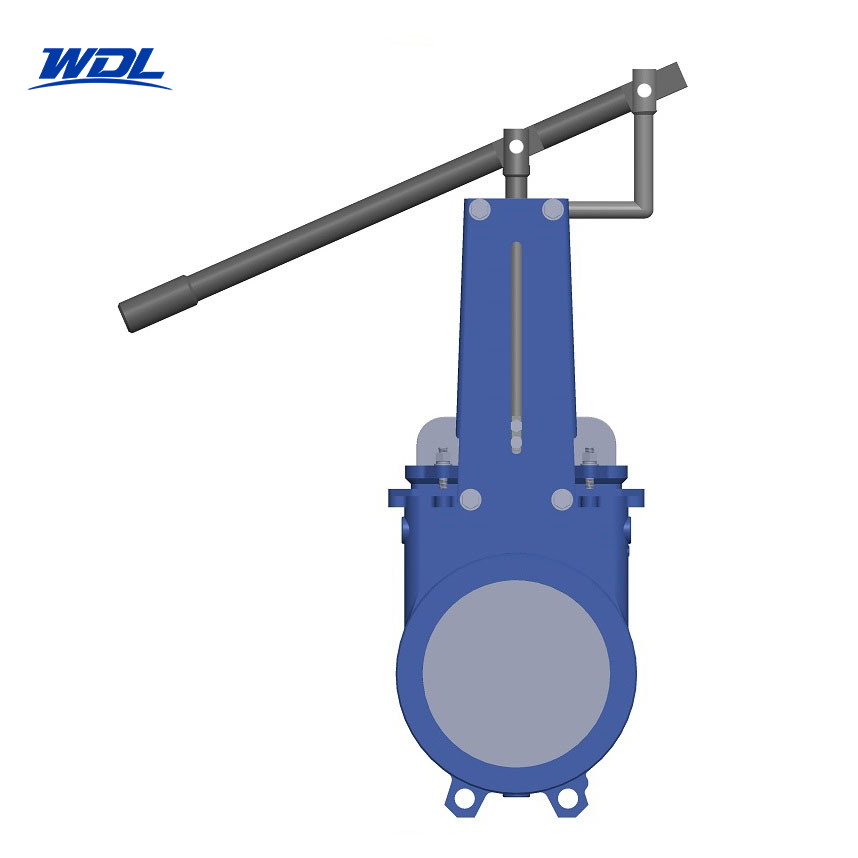
Handwheel or lever operation for accessible installations with moderate size and cycle requirements.
Pneumatic or electric actuation for remote isolation, frequent cycling and process interlocking.
Unidirectional Lever Operated Knife Gate Valve — QZU
For clean-fluid pipeline isolation, compare our broader industrial gate valve range.
Gate and seat materials must be matched to abrasion, corrosion and temperature. Hardened stainless gate materials, replaceable resilient seats and scraper arrangements can improve service life where particles collect on the gate surface.
For corrosive slurry, stainless, duplex or other alloy wetted parts may be specified. The final combination should be confirmed using fluid chemistry, solids content and required pressure-temperature rating.
Typical services include municipal and industrial wastewater, pulp stock, mining slurry, fly ash, food processing, chemical plants, power stations and bulk material handling. Knife gate valves should normally be used fully open or fully closed rather than for continuous throttling.
Inspection can include material verification, dimensional checks, shell and seat pressure testing, gate travel, actuator function and visual checks of the sealing system. Mounting orientation, support and access for seat replacement should be reviewed before installation.
Provide size, pressure rating, medium, solids percentage and particle size, body/gate/seat materials, pressure direction, operating temperature, installation orientation, actuator type, air or power supply, accessories, quantity and applicable flange standard.
It is generally intended for isolation. Partial opening can accelerate wear, vibration and erosion unless the exact design is specifically approved for regulating duty.
A unidirectional valve is designed to seal against pressure from one side. A bidirectional design is intended to seal from either side within its stated pressure limits.
Yes. Double-acting or spring-return actuators, solenoid valves, filter regulators and limit switches can be configured according to the operating sequence and site environment.
Send your valve specifications, drawings or RFQ. Our engineering team will review the operating conditions and contact you with a suitable solution.
WhatsApp us