Butterfly Control Valves for Petrochemical Plants
Published November 7, 2026 · Wong WP, Sales Manager · Xiamen WDL Valve Co., Ltd.
Are butterfly control valves suitable for petrochemical plants?
Yes—when the valve is sized for the installed flow cases and the disc, seat, shaft, actuator and fail action match the process duty. Butterfly control valves can provide high flow capacity in a compact body, especially on medium and large lines. They are not a universal replacement for globe control valves. High pressure drop, severe cavitation, flashing, erosive solids, very low flow or an unusually wide control range may require another valve or specialized trim.
The correct decision is based on process data, not line size alone. Butterfly control valves for petrochemical plants should be evaluated at minimum, normal and maximum flow, including startup, shutdown and upset cases that affect pressure drop, torque and valve opening.
Why use a butterfly valve for control duty?
A butterfly valve uses a rotating disc to change the available flow area. Compared with many linear control valves, it can be shorter, lighter and more economical at larger sizes. The quarter-turn motion also works well with pneumatic or electric actuators. These advantages can reduce structural load and installation space, but only if the valve delivers stable control in the required opening range.
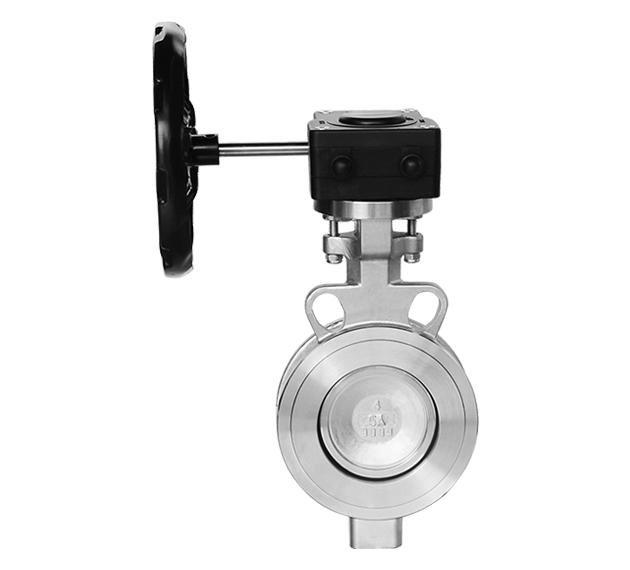
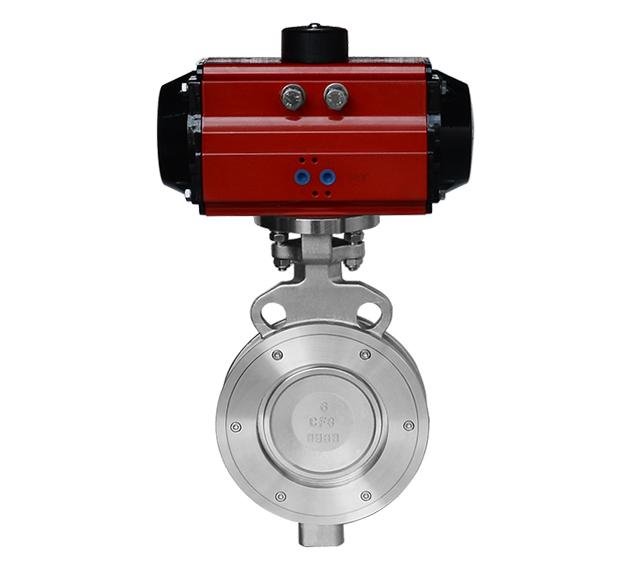
Good candidates often include cooling water, utility water, air, fuel gas and selected hydrocarbon or process services where the pressure drop and fluid behavior are compatible with the valve design. The WDL high-performance double-offset butterfly valve và pneumatic triple-offset wafer butterfly valve illustrate two different construction families. Final suitability depends on the approved process datasheet and project specification.
When should another control valve be considered?
A butterfly valve may be a poor choice when the process requires accurate control at very small flow, severe pressure reduction in one stage, sustained cavitation, flashing with damaging velocity, heavy abrasive solids or a flow characteristic that cannot be achieved with the selected disc and actuator. Noise and vibration also deserve attention in gas and high-energy liquid services.
Do not resolve these risks by oversizing the valve. An oversized butterfly control valve may spend most of its life near the closed position, where small movements cause large flow changes and local velocity can increase. The result can be unstable control, seat damage and excessive actuator cycling.
| Design question | Data required | Risk if omitted |
|---|---|---|
| Can the valve control all operating cases? | Minimum, normal and maximum flow with upstream/downstream pressure | Oversizing, poor control or insufficient capacity |
| Will the liquid cavitate or flash? | Fluid properties, vapor pressure, temperature and pressure recovery | Noise, vibration, erosion and shortened service life |
| What shutoff is required? | Leakage class, test method and flow direction | Disputed acceptance or unsafe isolation assumptions |
| Which offset design fits? | Temperature, pressure, cycle frequency and seat type | Seat wear or unsuitable operating torque |
| How should the actuator fail? | Process safety action, air pressure, stroking time and accessories | Wrong fail position or inability to stroke at worst-case differential pressure |
| Are materials compatible? | Full fluid composition, contaminants and temperature | Corrosion, swelling, embrittlement or galling |
How to size butterfly control valves for petrochemical plants
Control valve sizing should follow recognized equations and project practices for the actual fluid state. The ISA75.01 committee covers control valve sizing equations, while the ISA-75 series addresses installed flow capacity and related performance topics. A sizing calculation should distinguish incompressible liquid, compressible gas or vapor, two-phase conditions and any choked-flow limitation.
The calculation should return more than one nominal coefficient. Review the predicted valve opening at minimum, normal and maximum flow; available pressure drop; velocity; noise; cavitation or flashing risk; and the effect of reducers or fittings. The selected valve should operate in a usable range with enough margin for capacity without remaining too close to fully closed during normal service.
For gas and vapor service, provide molecular weight or density, ratio of specific heats, compressibility where applicable, inlet temperature and inlet/outlet pressure. For liquids, provide density, viscosity, vapor pressure and critical pressure data where required by the sizing method. Process engineers should identify whether data represent normal, startup, turndown or emergency conditions.
Double-offset or triple-offset?
A high-performance double-offset butterfly valve reduces rubbing between the disc and seat during most of the stroke and often uses a resilient or polymer seat. It can be suitable where tight shutoff and compact construction are required within the verified limits of the selected seat material.
A triple-offset butterfly valve uses additional geometric offset so the sealing surfaces approach contact near the end of closing. Metal-seated versions are commonly considered for higher temperature, higher cycling or fire-related project requirements. Triple-offset construction does not automatically make a valve a good control valve: disc geometry, seat design, installed flow characteristic, torque and actuator performance still need review.
The applicable design standard must be stated in the order. API’s current catalog includes API 609 for butterfly valves; check the API Digital Catalog for the current edition rather than relying on an undated summary.
Actuator sizing and fail action
Actuator selection must cover break-to-open, running and seating torque at the worst specified differential pressure. Include bearing friction, seat torque, fluid dynamic torque, safety factor and the available air supply or electrical conditions. An actuator chosen only from nominal line pressure may be unable to close or open under the actual upset condition.
The process safety review should define fail-open, fail-closed or fail-in-place behavior. A spring-return pneumatic actuator provides a defined action after loss of air, while a double-acting actuator normally requires stored energy or another strategy if a fail position is mandatory. Solenoid valve arrangement, air filter regulator, positioner, limit switches, partial-stroke requirements and stroking time should be included in the package specification.
Materials, seats and emissions
Body material alone does not establish compatibility. Review the disc, shaft, seat, packing, gasket, bolting and any hardfacing or overlay. Hydrocarbon composition, sulfur compounds, chlorides, water content, solids and cleaning chemicals can change the material decision. For sour service or other regulated applications, the buyer must identify the applicable project material requirements.
Soft seats can provide tight shutoff when temperature, pressure and chemical compatibility remain within their limits. Metal seats tolerate different temperature and wear conditions but require a defined leakage acceptance criterion. If the valve must satisfy fire-safe or fugitive-emissions requirements, state the test standard and the exact valve/packing configuration to be qualified. Do not infer these qualifications from the words “high performance.”
RFQ checklist for a petrochemical control butterfly valve
- Line size, pressure class, end connection and face-to-face requirement.
- Fluid composition, state, density, viscosity and vapor-pressure data as applicable.
- Minimum, normal, maximum, startup and shutdown flow cases.
- Upstream and downstream pressure for every case.
- Design and operating temperature ranges.
- Required flow characteristic, shutoff leakage and normal operating opening.
- Body, disc, shaft, seat, packing, gasket and bolting requirements.
- Actuator type, supply conditions, fail action, stroking time and accessories.
- Noise, cavitation, flashing, fire-safe, emissions and hazardous-area requirements.
- Inspection, testing, documentation and witness points.
WDL Valve can also review the pneumatic flanged triple-offset butterfly valve and the broader petrochemical process valve application guide when preparing a project-specific quotation.
Conclusion
Butterfly control valves for petrochemical plants can provide compact, high-capacity control when the valve is correctly sized and the seat, materials, actuator and fail action match every operating case. The final selection should follow the process datasheet and an approved sizing review.
Các câu hỏi thường gặp
Can a butterfly valve provide precise flow control?
It can provide stable control when the valve is correctly sized and the disc, actuator and positioner deliver a usable installed characteristic. Precision cannot be judged from valve type alone.
Why should a control butterfly valve be smaller than the line?
A reduced valve size may place normal flow in a more useful opening range. The choice must come from a sizing calculation and velocity review, with suitable reducers and piping geometry.
Is a triple-offset valve always better for petrochemical service?
No. Triple-offset valves suit many demanding duties, but a double-offset or another control valve may be more appropriate depending on temperature, leakage, pressure drop, materials and control behavior.
Can the same valve provide control and emergency isolation?
Only when the process safety study and project specification permit the combined function. Control performance, shutoff integrity, actuator architecture and testing must all support the duty.
What is the most important information for actuator sizing?
Provide the maximum differential pressure, process conditions, required fail action, available supply pressure, stroking time and all accessories. The valve manufacturer also needs the verified torque profile.
Request a Control Butterfly Valve Review
Send WDL Valve the process datasheet, flow cases, pressure drop, materials, shutoff requirement and actuator fail action. We will review the application and prepare a technical quotation.
Content structure informed by Eugen Ullrich’s LLM content framework, CC BY 4.0.