API 594 10th Edition Check Valves: Buyer Guide
直接回答: API 594 10th Edition check valves should be specified by valve type, body style, pressure class, materials, end connection, installation position and required testing. As of October 2026, API lists Errata 1 for the 10th edition, so buyers should use a controlled copy of the standard and include the applicable edition and errata in the purchase order.
Published: October 20, 2026 | 作者: 黄WP,厦门WDL阀门有限公司销售经理.
What changed in October 2026?
- API published Errata 1 for API 594, 10th Edition in October 2026.
- This guide separates the standard designation from project-specific requirements such as sour service, chloride exposure, low temperature and water-hammer control.
- The RFQ checklist below was added to help buyers compare technically equivalent offers.
What does API 594 10th Edition cover?
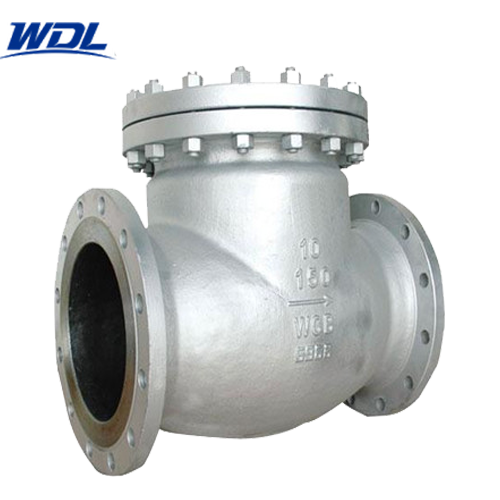
API 594 covers check valves with flanged, lug, wafer and butt-welding end configurations. The standard addresses design, materials, dimensions, pressure-temperature ratings, inspection, examination and testing. It does not replace the purchaser’s datasheet. The datasheet still has to define the fluid, operating envelope, allowable leakage, installation orientation and any supplementary examination.
A product described only as an “API check valve” is not sufficiently specified. State API 594, 10th Edition, including applicable errata, then identify the required valve pattern and project exceptions. If the pipeline specification instead requires API 6D or BS 1868, that requirement should remain explicit. WDL’s API 6D / BS 1868 flanged swing check valve is one example of a pipeline check valve supplied to a different design basis.
Which check valve design should a buyer choose?
The right design is the one that closes reliably at the expected flow conditions without unacceptable pressure loss or surge. A compact wafer valve can reduce weight and installation length. A flanged swing check valve offers a familiar, serviceable arrangement. Axial or nozzle-style designs may be considered where rapid closure and surge control are dominant requirements. Do not select by nominal size alone.
| Design question | Why it matters | What the RFQ should state |
|---|---|---|
| Body and end style | Controls face-to-face length, piping loads and removal space | Wafer, lug, flanged or butt-weld; mating flange standard |
| Closure behavior | Affects slam, pressure surge and pump protection | Normal/minimum flow, velocity, reverse-flow event and transient study data |
| Installation | Some mechanisms depend on gravity or a defined flow direction | Horizontal or vertical line, upward/downward flow and available straight run |
| Seat performance | “Non-return” does not automatically mean bubble-tight isolation | Test medium, test pressure and allowable leakage |
| Maintenance access | Influences total lifecycle cost | Removability, inspection access, spare parts and lifting limits |
How should materials be selected?
Body material is only the first decision. Check the disc or plates, hinge or spring, shaft, pins, seat surfaces, bolting and any non-metallic parts. Carbon steel can suit many hydrocarbon and utility services. Stainless steel, duplex stainless steel, nickel alloys or nickel-aluminum bronze may be considered when corrosion, chlorides or seawater change the risk. The final selection depends on fluid composition, water content, temperature, velocity and shutdown conditions.
For chloride service, compare localized corrosion resistance and crevice geometry rather than relying on a generic “stainless steel” description. For sour service, identify the applicable material-control requirements in the project specification. For low-temperature service, state the design minimum metal temperature and impact-test requirements.
What inspection and testing information belongs in the purchase order?
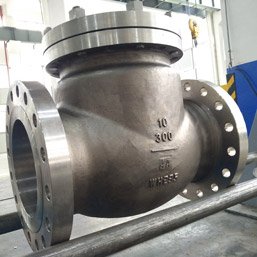
State the inspection and pressure-test standard, acceptance criteria, witness points and documentation before the order is placed. API 594 defines product requirements, while other referenced standards and the project specification may govern pressure testing, flange dimensions, pressure-temperature ratings, material certification or non-destructive examination. ASME B16.34, for example, covers pressure-temperature ratings and other construction requirements for applicable valve materials and end types.
- Material certificates and heat-number traceability
- Shell and seat test method, pressure, duration and acceptance
- Visual, dimensional and functional inspection
- NDE extent and acceptance criteria when required
- Coating, preservation and packing requirements
- Final drawings, data books and spare-parts list
Can an API 594 check valve be used as an isolation valve?
No. A check valve is a non-return device, not a positive isolation valve. Backpressure, contamination, disc position and seat condition can allow reverse leakage. Use dedicated block valves and the project’s isolation procedure when personnel safety, equipment entry or line breaking is involved. See WDL’s detailed guide: 止回阀能否用作油气管道中的隔离阀?
API 594 check valve RFQ checklist
- Applicable standard, edition and errata
- Valve pattern, body style, size and pressure class
- Design and maximum/minimum operating pressure and temperature
- Fluid composition, solids, chlorides, sour components and water content
- Line orientation, flow direction and normal/minimum flow rate
- Body, trim, seat, spring and bolting materials
- End connection, facing and face-to-face requirement
- Required closure behavior or transient-analysis constraints
- Inspection, testing, certification and witness requirements
- Coating, preservation, documentation and spare parts
Frequently asked questions about API 594 10th Edition check valves
Is API 594 10th Edition the current edition?
API’s latest-updates page lists API 594 10th Edition and Errata 1 dated October 2026. Buyers should verify the controlled standard and contract requirements at the time of purchase.
Does API 594 guarantee zero reverse leakage?
No. Leakage acceptance depends on the specified design, seat construction and test criteria. State the required leakage rate and test conditions in the RFQ.
Are swing check valves covered by every API 594 purchase specification?
No. The purchaser must identify the required pattern and standard. Some pipeline swing check valves are specified to API 6D or BS 1868 instead.
What data helps prevent check valve slam?
Provide minimum, normal and maximum flow, line velocity, pump trip scenario, downstream pressure and pipe-system transient information. A nominal size and pressure class are not enough.
Can WDL supply corrosion-resistant check valves?
WDL Valve offers check valves in stainless steel, duplex, nickel alloys, titanium and NAB C95800. Suitability must be confirmed from the complete service data and project specification.
Request a technical review
Send the valve datasheet, line class, fluid composition, operating envelope and testing requirements to WDL Valve. Our team will review the information before preparing an offer.