WDL Duplex Ball Valve for Seawater and Chloride Service
The WDL Duplex Ball Valve provides fast
quarter-turn isolation, a direct flow path and dependable shutoff
for seawater, desalination, offshore and chloride-containing
process systems. WDL can manufacture the valve in Duplex 2205,
Super Duplex 2507 or another project-specified duplex grade.
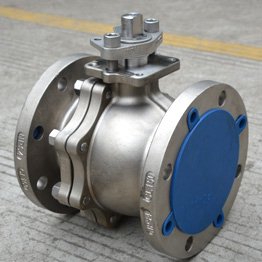
connection, seat and operating method.
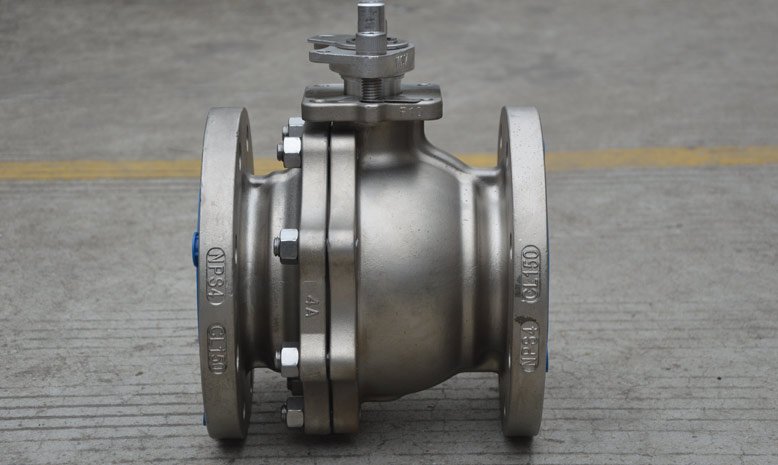
What Is the WDL Duplex Ball Valve?
The
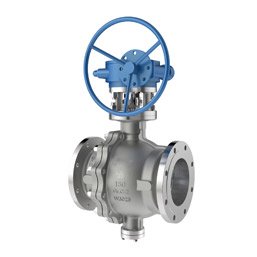
WDL Duplex Ball Valve
is an industrial isolation valve manufactured from duplex or
super duplex stainless steel. A 90-degree rotation of the ball
opens or closes the flow passage, allowing rapid isolation with
relatively low pressure loss when a full-bore design is used.
WDL selects the body, ball, stem, seats, seals and fasteners
according to the process fluid, chloride concentration,
temperature, pressure and required shutoff performance.
Why Use Duplex Stainless Steel for Ball Valves?
Duplex stainless steel contains both ferritic and austenitic
phases. This structure combines useful corrosion resistance with
higher mechanical strength and improved resistance to
chloride-induced stress-corrosion cracking.
- Good resistance to many chloride-containing fluids
- Higher strength than common 300-series stainless steels
- Improved resistance to chloride stress-corrosion cracking
- Suitable for many seawater, brine and offshore applications
- Available in cast and forged valve constructions
Material selection must still consider temperature, chloride
concentration, pH, oxygen, flow velocity, deposits, crevices and
possible chemical contamination.
WDL Duplex Ball Valve Design Options
| Item | Available WDL Option |
|---|---|
| Material | Duplex 2205, Super Duplex 2507 or project-specified grade |
| Valve function | Quarter-turn isolation with direct flow path and tight shutoff |
| Ball construction | Floating ball or trunnion-mounted ball |
| Bore | Full bore or reduced bore |
| End connections | Flanged, threaded, socket-welded or butt-welded |
| Operation | Lever, gearbox, pneumatic actuator or electric actuator |
| Design basis | API 608, API 6D, ASME B16.34 or project standard |
| Optional requirements | Fire-safe, anti-static, cavity relief, emergency shutoff and emission control |
Published options are provided as a general guide. Final
dimensions, pressure-temperature limits, materials and testing
requirements must be confirmed in the approved WDL drawing and
project datasheet.
Duplex 2205 or Super Duplex 2507?
| Selection Point | Duplex 2205 | Super Duplex 2507 |
|---|---|---|
| Common designation | UNS S31803 / S32205 | UNS S32750 or project-specified super duplex grade |
| Chloride resistance | Suitable for many moderate chloride conditions | Higher resistance for more aggressive chloride conditions |
| Typical use | Process water, pulp and paper, chemical and selected marine systems | Seawater, desalination, offshore and concentrated brine systems |
| Relative cost | Normally lower | Normally higher |
Super Duplex 2507 normally provides higher localized-corrosion
resistance than Duplex 2205. However, the higher grade should
only be selected when the verified process conditions justify
its additional material and manufacturing cost.
Typical Applications
- Seawater intake and cooling-water systems
- Reverse-osmosis desalination plants
- Concentrated brine and high-chloride water lines
- Offshore platforms and marine utility systems
- Produced-water and water-injection pipelines
- Pulp, paper and bleaching processes
- Chemical processing and fertilizer plants
- Automated emergency or batch-isolation systems
Important Seat and Trim Selection
Selecting a duplex valve body does not complete the material
review. The ball, stem, seats, packing, body seals, springs and
bolting must also be compatible with the fluid and operating
conditions.
Soft seats
PTFE-based and modified polymer seats are commonly used for clean
fluids requiring tight shutoff. Their pressure and temperature
limits must be verified.
Metal seats
Metal seats may be required for higher temperatures, abrasive
particles, frequent cycling or severe-service applications.
Coating and hardness must be selected to control wear and galling.
Stem and ball
The stem and ball should use a compatible duplex grade or another
approved corrosion-resistant material. Surface finish and
hardness influence operating torque and sealing performance.
Manufacturing and Inspection Requirements
Duplex stainless steel depends on controlled chemistry, heat
treatment and phase balance. Incorrect welding or heat treatment
can reduce corrosion resistance even when the material has the
correct UNS designation.
- EN 10204 3.1 material certificates when required
- Positive material identification of pressure and wetted parts
- Controlled solution heat treatment
- Ferrite or phase-balance verification when specified
- Qualified welding procedures and controlled heat input
- Surface cleaning, pickling and passivation
- Shell, seat-leakage and operational testing
- ASTM G48 corrosion testing when required
ASTM A995/A995M
covers duplex stainless steel castings used for
pressure-containing components.
Additional material guidance is available from the
Outokumpu Duplex Stainless Steel Reference
.
Information Required for a WDL Quotation
- Valve size, pressure class and required quantity
- Complete fluid composition and chloride concentration
- Operating and design pressure
- Operating and design temperature
- Required duplex or super duplex material grade
- Floating or trunnion-mounted construction
- Full-bore or reduced-bore requirement
- End connection and face-to-face standard
- Seat, seal, packing and bolting requirements
- Manual, pneumatic or electric operation
- Fire-safe and anti-static requirements
- NDE, corrosion testing and third-party inspection
Frequently Asked Questions
Is the WDL Duplex Ball Valve suitable for seawater?
It can be configured for seawater service, but the final material
grade depends on temperature, chloride concentration, velocity,
oxygen, crevices and contamination. Some seawater conditions may
require Super Duplex 2507.
Does WDL offer both 2205 and 2507?
Yes. WDL lists Duplex 2205, Super Duplex 2507 and
project-specified duplex grades as available material options.
Can the valve use pneumatic or electric operation?
Yes. The valve can use a lever, gearbox, pneumatic actuator or
electric actuator. Actuator sizing depends on valve torque,
pressure, temperature and required safety position.
Can a duplex ball valve be used for flow control?
A standard ball valve is primarily intended for isolation.
Continuous throttling may damage the seats. A characterized
control-ball design should be used when flow regulation is
required.
What information should be sent to WDL?
Send the process medium, chloride content, valve size, pressure,
temperature, connection, materials, operating method and required
inspection documents.