Gate Valve vs Ball Valve: Which Should You Choose?
Industrial valve selection guide · Reviewed October 2026
Gate valve vs ball valve selection depends on the required shutoff, operating speed, pressure loss, media, temperature, installation space and maintenance plan. A gate valve is often preferred for full-bore isolation in large pipelines and high-temperature service, while a ball valve is usually better when fast quarter-turn operation and tight shutoff are required.
Neither valve is automatically better. The correct choice is the design that matches the actual duty and remains operable throughout the expected service life.
How do gate valves and ball valves work?
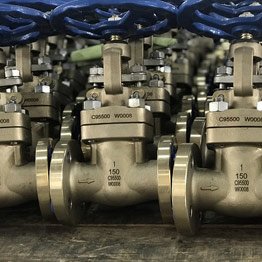
A gate valve uses a wedge or parallel gate that travels vertically across the flow path. When fully open, the gate moves out of the bore and leaves a relatively straight passage. The multi-turn stem movement makes opening slower, but the design is well suited to isolation duty and large pipeline sizes.
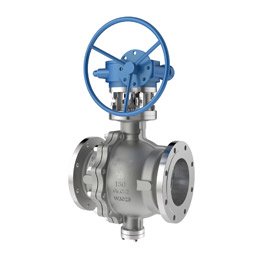
A ball valve uses a bored spherical closure member. Turning the stem by 90 degrees aligns the bore with the pipe or rotates the solid side of the ball across the flow. Floating and trunnion-mounted designs use different seat-loading arrangements, and both soft-seated and metal-seated configurations are available.
Gate valve vs ball valve: what are the practical differences?
The most useful comparison is based on operating duty rather than valve appearance. The table below shows the usual tendencies; final performance depends on the specific construction, seat, pressure class, material and manufacturer design.
| Selection factor | Gate valve | Ball valve | Selection meaning |
|---|---|---|---|
| Operation | Multi-turn linear movement | Quarter-turn rotary movement | Ball valves normally operate faster and are easier to automate |
| Pressure loss | Low when fully open | Low with a full-bore design; higher with reduced bore | Check the actual bore, not only the valve type |
| Shutoff | Reliable isolation with suitable wedge, seat and trim | Soft seats can provide very tight shutoff; metal seats suit severe duty | State the required leakage acceptance method |
| Installation space | Needs vertical clearance for stem and gate travel | More compact above the pipeline | Check actuator, gearbox and maintenance access |
| Throttling | Generally unsuitable for prolonged partial opening | Standard isolation designs are not intended for continuous control | Use a purpose-designed control valve when regulation is required |
| Typical maintenance concern | Stem packing, wedge and seat wear, and stem travel | Seat damage, cavity pressure, packing and actuator alignment | Plan access and spare parts before installation |
On a phone, swipe the table left or right to view every column.
Which valve has lower pressure loss?
A fully open gate valve and a full-bore ball valve can both provide a nearly straight flow path. The ball valve advantage disappears if a reduced-bore design is selected without considering allowable velocity and pressure drop.
For piggable pipelines, the purchaser should specify the required bore and pigging conditions. “Full port” should be confirmed against the referenced standard and approved drawing instead of treated as a general marketing term.
When should you choose a gate valve?
Choose a gate valve when the main duty is infrequent isolation and the line should remain fully open during normal operation. Gate valves are common in steam, water, oil, power and process pipelines where low open-position resistance and established high-temperature trim options are important.
A gate valve can also be practical at large nominal sizes where a comparable ball valve would be heavier, more expensive or require a much larger actuator. The tradeoff is slower operation and additional vertical clearance, particularly with an outside-screw-and-yoke rising stem.
For elevated pressure and temperature, a pressure-seal bonnet may be specified. The
WDL pressure-seal forged steel gate valve
is one example designed for water, steam and oil pipeline isolation.
When should you choose a ball valve?
Choose a ball valve when the process needs fast operation, compact automation or tight shutoff. The 90-degree movement suits pneumatic, electric and hydraulic actuators and gives clear open or closed position indication.
Ball valves are widely used in oil and gas, petrochemical, chemical, LNG, marine and utility systems. Floating designs are common in smaller sizes, while trunnion-mounted designs reduce operating torque in larger sizes and higher differential pressure service.
Seat selection remains decisive. Soft seats may provide very tight isolation but have defined temperature, pressure and chemical limits. Metal-seated ball valves can handle higher temperature or abrasive media, but their leakage acceptance and operating torque must be specified. Review the WDL
industrial ball valve range
and the related
industrial ball valve selection guide.
How do media and temperature affect gate valve vs ball valve selection?
Temperature can shift the decision toward a metal-seated gate valve or a purpose-designed metal-seated ball valve. Standard polymer ball-valve seats must remain within their pressure-temperature and chemical limits. Cryogenic ball valves need suitable materials, an extended bonnet or stem arrangement, controlled cavity pressure and project-specific testing.
Solids also change the comparison. Particles can collect in a ball-valve cavity or damage soft seats. A conventional gate valve may experience solids packing in the body bottom or scoring across the seating surfaces. Slurry service may require a knife gate valve, severe-service ball valve or another design developed for the particle size, concentration and cycling frequency.
For corrosive media, do not select the valve by body material alone. The ball or wedge, seats, stem, packing, gaskets, bolting and any coating must be compatible with the concentration, temperature, contaminants and cleaning chemicals.
Which valve is easier to automate and maintain?
Ball valves are generally easier to automate because the closure member moves through 90 degrees. Gate valves require multi-turn rotary input or a linear actuator with enough stroke to move the gate fully. Actuator sizing for both types must consider maximum differential pressure, seat friction, packing load, service factor and required operating time.
Maintenance access can be more important than theoretical simplicity. A top-entry ball valve may allow internal access without removing the entire body, while a side-entry design may require pipeline removal. A bolted-bonnet gate valve provides access from above but needs clearance to withdraw the stem and gate assembly.
The purchase specification should identify recommended spare parts, special tools, lubrication requirements, stem or seat injection systems, actuator settings and the permitted field-repair scope.
What standards apply to gate and ball valves?
The applicable standard depends on pipeline service and valve construction.
API Specification 6D
covers pipeline and piping valve requirements for valve types that include gate and ball valves. Ball-valve projects may also reference API 608, while steel gate valves commonly use standards such as API 600 or API 602 according to construction and size.
The official
ASME B16.34
scope includes pressure-temperature ratings, materials, dimensions, testing and marking for applicable valve constructions. Always state the required edition, testing standard, fire-safe requirement, fugitive-emission requirement and project additions in the purchase order.
What should be included in a valve inquiry?
A useful inquiry allows the manufacturer to compare gate valve vs ball valve options against the same service conditions. Include the following information:
- Valve size, pressure class and required end connection.
- Design pressure, operating pressure and maximum differential pressure.
- Minimum, normal and maximum temperature.
- Medium, concentration, solids content and corrosion concerns.
- Body, trim, seat, packing and bolting requirements.
- Manual, pneumatic, electric or hydraulic operation.
- Required operating time and normal cycling frequency.
- Design, testing, fire-safe, emission and documentation standards.
Frequently asked questions about gate valve vs ball valve selection
Is a ball valve better than a gate valve?
A ball valve is usually better for fast operation, compact automation and tight soft-seat shutoff. A gate valve may be better for large sizes, infrequent full-bore isolation and high-temperature service. The operating conditions decide which design is better.
Can gate valves and ball valves be used for flow control?
Standard isolation gate valves and ball valves should not be assumed suitable for continuous throttling. Partial opening can cause vibration, erosion, seat damage or unstable control. Use a valve and trim specifically designed for regulation when flow control is required.
Which valve closes faster?
A ball valve normally closes faster because it requires only a quarter turn. Fast closing can increase surge or water-hammer risk, so actuator speed may need to be controlled.
Which valve is better for high temperature?
Metal-seated gate valves are widely used in high-temperature service, but purpose-designed metal-seated ball valves can also be suitable. Verify the pressure-temperature rating of the body, seats, packing, gaskets and bolting.
Which valve is better for buried pipelines?
Both types can be engineered for buried service. Ball valves are common in transmission pipelines because of quarter-turn operation and trunnion-mounted options. Buried gate valves remain common in water systems. Extension stems, coatings, sealing, drainage and access must match the installation.
Need help choosing between a gate valve and ball valve?
WDL Valve can compare valve type, material, seat, pressure class, end connection and actuation against your project conditions.