Ball Valve: 7 Types, Materials and Selection Guide
How Does a Ball Valve Work?
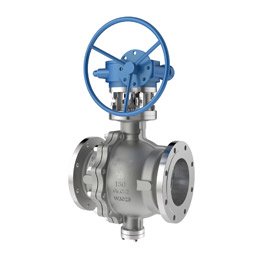
The valve contains a ball with a bore through its center. When the bore aligns with the pipeline, fluid passes through. Turning the stem by 90 degrees moves the solid side of the ball across the flow path and closes the valve.
Soft seats can provide tight shutoff in compatible services. Metal-seated designs are considered where temperature, abrasion or operating conditions exceed the limits of polymer seats. Ball valves are primarily used for on-off isolation. Throttling requires a design such as a V-port or segmented ball valve that is engineered for control duty.
7 Common Ball Valve Types
Floating vs. Trunnion Ball Valve
A floating ball valve uses line pressure to push the ball toward the downstream seat. This arrangement is compact and widely used in smaller sizes. As size and differential pressure increase, seat load and required torque can rise.
A trunnion-mounted ball valve supports the ball mechanically and commonly uses spring-loaded or pressure-assisted seats. This arrangement is often selected for larger sizes and higher pressure pipeline duties. The final decision should consider size, class, pressure direction, shutoff requirement, cavity pressure relief and actuator torque.
Full-Port vs. Reduced-Port Ball Valve
The term “full port” should be verified against the specified standard and manufacturer drawing. A nominal label alone does not confirm that a cleaning pig or inspection tool can pass through the valve.
How Should Ball Valve Materials Be Selected?
Material selection starts with the fluid composition, concentration, contaminants, temperature and pressure. Carbon steel is common in hydrocarbon and general industrial service. Stainless steel may be used for water, chemicals and corrosive environments. Duplex and super duplex stainless steels are considered for chloride-rich media, while nickel alloys, Monel and titanium are used only after compatibility and project requirements are reviewed.
Every wetted component matters. The body may be compatible while the ball, stem, seat, seals, packing or fasteners are not. Sour gas service can also require material hardness control and compliance with the specified NACE or ISO sour-service document.
Soft-Seated or Metal-Seated Ball Valve?
PTFE, reinforced PTFE, PEEK and other polymer seats can provide low torque and tight shutoff within their approved pressure, temperature and chemical limits. The exact limit depends on the compound, filler and valve construction.
Metal-seated ball valves are considered for higher temperatures, abrasive particles, erosive flow or services where soft seats would be damaged. Hardfacing, coating thickness, ball finish, seat contact and leakage acceptance must be stated in the datasheet. “Metal seated” does not automatically mean zero leakage.
7 Ball Valve Selection Checks
- Define the medium. State the chemical composition, phase, solids, water content, corrosive components and cleaning media.
- Provide design conditions. Include design and operating pressure, temperature, differential pressure and credible upset conditions.
- Select the valve function. Distinguish isolation, emergency shutdown, control, diversion, pigging and double-block requirements.
- Confirm bore and ends. Specify full or reduced bore, flange facing, weld ends, threaded ends and face-to-face dimensions.
- Set leakage requirements. Identify the applicable seat-test direction, test medium, acceptance criteria and shutoff differential pressure.
- Review safety features. State fire-safe, antistatic, blowout-resistant stem, cavity-relief and fugitive-emission requirements where applicable.
- Size the actuator. Provide maximum differential pressure, required operating time, power supply, fail position, controls and environmental conditions.
Which Standards Apply to Industrial Ball Valves?
The applicable standard depends on the industry and valve construction. API Specification 6D addresses pipeline and piping valves. API 608 covers metal ball valves for petroleum, petrochemical and industrial applications. ISO 17292 covers metal ball valves for petroleum, petrochemical, natural gas and related industries.
ASME B16.34 covers pressure-temperature ratings, materials, testing, marking and other requirements for flanged, threaded and welding-end valves. Projects may also specify separate standards for face-to-face dimensions, flanges, fire testing, emissions, inspection and sour service. List every required edition in the purchase specification.
What Information Should a Ball Valve RFQ Include?
Common Ball Valve Selection Mistakes
- Selecting a valve from size and pressure class alone
- Using a standard soft seat above its approved temperature range
- Assuming every full-port valve is piggable
- Using an ordinary on-off ball valve for continuous throttling
- Ignoring trapped cavity pressure and thermal expansion
- Specifying “zero leakage” without a test standard or acceptance criterion
- Sizing the actuator from normal pressure instead of the maximum operating differential
Frequently Asked Questions
What is the main advantage of a ball valve?
A ball valve provides quarter-turn operation, a clear position indication and reliable isolation when its design and materials match the service.
Can a ball valve control flow?
A standard ball valve is mainly intended for isolation. A V-port or segmented ball valve can be engineered for flow control using the required Cv or Kv, characteristic and actuator package.
Which is better, a floating or trunnion ball valve?
Neither design is universally better. Floating designs are common in smaller sizes, while trunnion-mounted valves are often selected for larger sizes and higher differential pressure. Project conditions decide the choice.
Can a ball valve be used for steam?
It can be used only when the valve pressure-temperature rating, seat, seals, packing and body materials are approved for the steam conditions. Do not rely on pressure class alone.
What causes a ball valve to leak?
Possible causes include seat wear, debris, chemical attack, temperature damage, ball-surface damage, incorrect assembly and operation outside the rated conditions.
Discuss Your Ball Valve Requirements
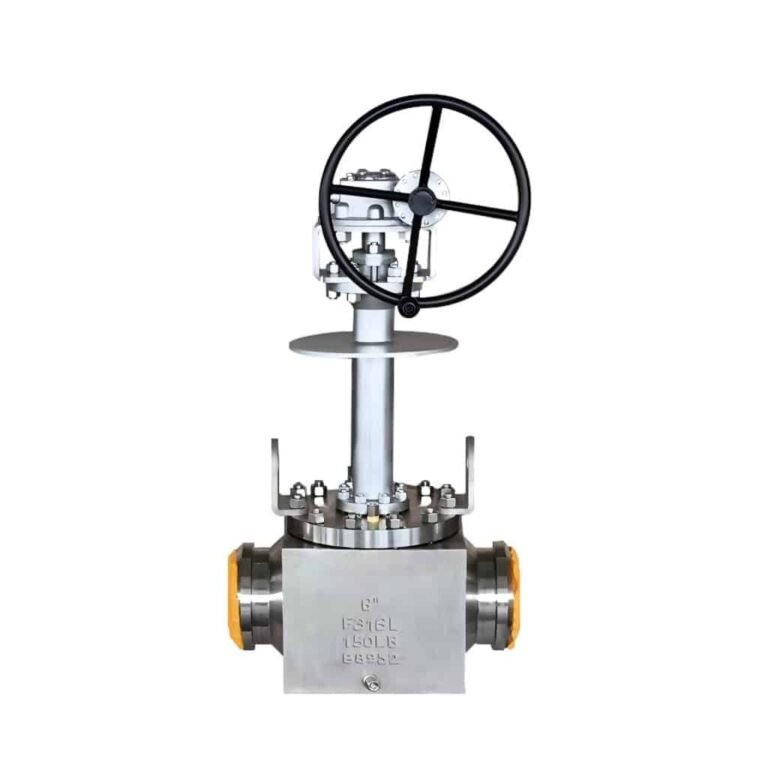
WDL Valve supplies industrial ball valves in carbon steel, stainless steel, duplex stainless steel and selected special alloys. Explore the WDL ball valve range, the duplex ball valve, the top-entry cryogenic ball valve guide and the side-entry cryogenic ball valve guide.
For technical review, send the medium, size, pressure class, temperature, materials, connections, shutoff requirement and actuation details through the WDL Valve contact page.
Author: Wong WP, Sales Manager, Xiamen WDL Valve Co., Ltd.