Welcome to Xiamen WDL VALVE Co., Ltd.

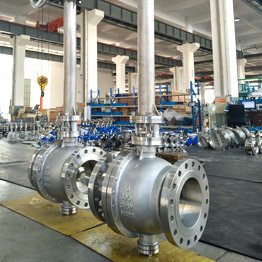
WDL Valve manufactures industrial ball valves for oil and gas, chemical, petrochemical, LNG, power, water, seawater and severe-service projects. Available configurations include floating, trunnion-mounted, top-entry, side-entry, cryogenic, forged, metal-seated and special-alloy ball valves.
Floating ball valves provide compact isolation for smaller sizes and moderate pressure ranges. Trunnion-mounted designs support larger sizes and higher differential pressure with lower operating torque.
Top-entry valves allow in-line access, while side-entry valves use a conventional bolted-body arrangement. Cryogenic, metal-seated and special-alloy configurations address low temperature, abrasion, high temperature and corrosion.
Browse all industrial ball valves.
Reliable ball valve selection starts with the fluid, pressure, temperature, differential pressure, solids, cycling frequency and leakage requirement. The review should then cover bore size, body construction, seat design, cavity-pressure relief, stem sealing, fire-safe requirement, antistatic provisions, actuation and inspection.
Use the Ball Valve Types, Materials and Selection Guide and Industrial Ball Valve Selection guide for additional detail.
Body and trim options include carbon steel, stainless steel, alloy steel, Duplex 2205, Super Duplex 2507, titanium, Monel, nickel, Hastelloy, Inconel and other project-specified materials. Applications include pipeline isolation, tank farms, process skids, steam and thermal fluid, abrasive media, LNG transfer, seawater and corrosive chemical systems.
For unusual temperature, emissions, erosion or corrosion risk, review the Severe Service Valve Manufacturer capabilities.
Floating designs are commonly used for smaller sizes and moderate conditions. Trunnion-mounted valves are considered for larger sizes, higher pressure or lower operating torque.
Metal seats may be required for high temperature, abrasive particles, frequent cycling or service conditions beyond soft-seat limits.
Provide pressure, differential pressure, temperature, seat design, cycle time, fail position, supply pressure and required safety factor.
Share the service data and project specification for configuration review, valve selection and quotation.
Send your valve specifications, drawings or RFQ. Our engineering team will review the operating conditions and contact you with a suitable solution.
WhatsApp us